


Желіфікація
Gelification
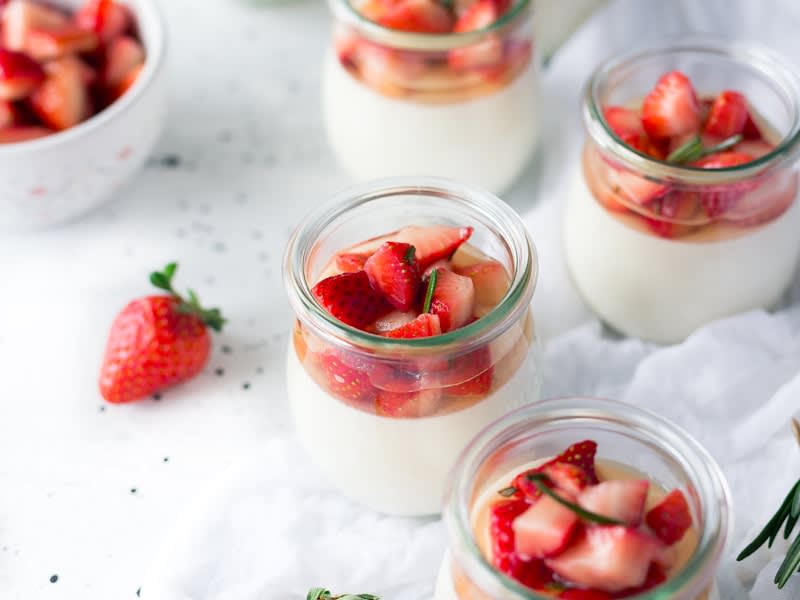
Gelification is giving liquids the form of a gel or jelly using gelling agents: gelatine, agar, pectin.
Gelification is the process of turning a liquid into a gel or jelly with the help of gelling agents — substances that form a three-dimensional network in the liquid which holds water and gives the mass a semi-solid, springy structure. It is an ancient culinary principle (think of aspic or fruit jelly) that molecular cuisine has raised to the level of a precise tool of textures.
Different gelling agents give different results. Gelatine (of animal origin) forms a tender, elastic jelly that melts in the mouth and in warmth. Agar-agar (from seaweed) gives a firmer, more “brittle” heat-stable gel that sets already at room temperature. Pectin (from fruit) is responsible for the set of jams and jellies. There are more exotic ones too — gellan, carrageenan, methylcellulose (unique in that it sets when hot and melts when cold). By controlling the type and quantity of gelling agent, the cook creates a wide spectrum of textures: from trembling jellies and springy cubes to thin films, “spaghetti” of juices, and flowing fluid gels. Gelification is the foundation of many modern gastronomic techniques.




